
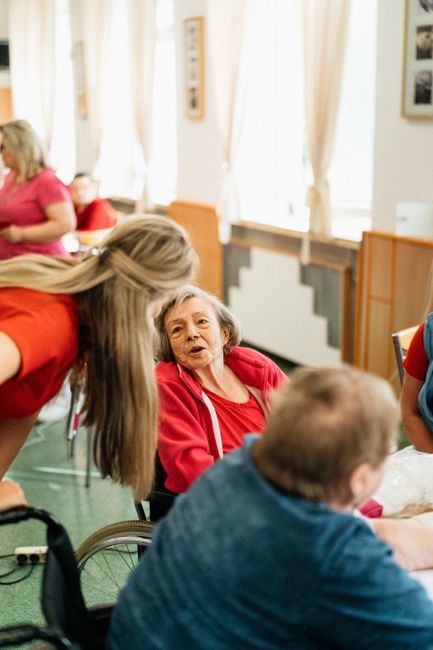
What role does assisted living play in social connection?
Assisted living can make it easier for older adults to maintain regular contact with other people. Shared meals, scheduled activities, common areas, and daily routines create natural opportunities for conversation and companionship without requiring residents to arrange every interaction themselves.
For residents in Perkasie, PA, this structure can be especially helpful when changes in mobility, driving ability, weather, or household circumstances have reduced access to previous social routines. The goal is not to keep residents busy every moment. It is to provide dependable opportunities for meaningful connection while respecting personal choice.
Social connection may include:
- Talking with a neighbor over coffee
- Joining a group activity
- Eating with others rather than alone
- Visiting with family members
- Taking part in faith-based, educational, creative, or recreational programs
- Building a familiar relationship with staff members
These everyday interactions can help reduce isolation and give residents a stronger sense of belonging.
How do shared meals encourage relationships?
Shared dining is one of the most consistent ways assisted living supports social contact. Residents often see the same people at breakfast, lunch, or dinner, which makes conversation easier to begin and relationships easier to maintain.
A shared meal does not require a resident to be highly outgoing. Familiar faces, repeated seating arrangements, and simple questions about the food or the day can gradually lead to stronger connections. Some residents may prefer a small table or quiet meal, while others may enjoy a larger group.
Dining areas can also help staff notice changes in mood, appetite, or participation. If someone who usually joins others begins eating alone, that change may signal a need for a gentle check-in.
Can assisted living help someone who is shy or socially withdrawn?
Yes, although social connection usually develops gradually. A resident does not need to attend every activity or become highly involved to benefit from an assisted living setting.
For someone who is shy, newly widowed, experiencing memory changes, or adjusting to a new living arrangement, low-pressure activities may be more comfortable than large gatherings. Examples include:
- Sitting in a common room while others are present
- Participating in a small craft or discussion group
- Listening to music
- Joining a walking group
- Helping with a simple shared task
- Having a brief conversation with a neighbor or staff member
A quiet resident may show connection through consistent attendance, familiar greetings, or choosing to sit near others. Social participation should not be measured only by how much a person talks.
What types of activities build lasting friendships?
Activities are most effective when they reflect residents’ interests and abilities. A broad schedule gives people more chances to find others with similar preferences.
Useful options may include:
- Exercise suited to different mobility levels
- Card, board, or word games
- Gardening and seasonal decorating
- Music, singing, or performances
- Art, knitting, sewing, or other hands-on projects
- Current-events or book discussions
- Educational presentations
- Movie afternoons
- Cooking or baking activities
- Outdoor walks when weather allows
The activity itself is only part of the benefit. Repeated participation allows residents to see one another regularly, remember shared experiences, and develop familiar routines. A resident who does not enjoy organized programs may still connect through a lounge, garden area, library, or dining room.
How can assisted living support family relationships?
Assisted living does not replace family involvement. It can provide a setting that makes visits more comfortable and predictable.
Family members may find it easier to visit when a resident has a private or shared living space designed for visitors, common areas for conversation, and activity schedules that create natural topics to discuss. Instead of focusing only on health concerns, families can talk about a recent program, a favorite meal, a new neighbor, or an upcoming seasonal event.
Regular contact is often more valuable than occasional long visits. Depending on a resident’s preferences, connection may include:
- Short in-person visits
- Phone conversations
- Video calls
- Shared meals
- Looking through photographs
- Reading together
- Celebrating birthdays or holidays in a simple way
Seasonal conditions can also affect family visits. Snow, ice, heat, and shorter winter daylight may make travel more difficult for older adults and visitors. Indoor gathering areas and flexible communication options can help maintain relationships when outdoor plans are not practical.
Does staff interaction count as social connection?
Yes. Respectful, consistent interactions with staff can provide reassurance and a sense of familiarity. A greeting in the hallway, help with a daily routine, or a short conversation can be meaningful, especially for someone who spends much of the day alone.
Staff members may also help residents participate without making them feel pressured. For example, a resident may be more comfortable attending an activity if someone explains what to expect, introduces them to another participant, or helps with transportation within the building.
At the same time, staff relationships should complement—not replace—peer relationships, family contact, and personal interests. A socially healthy environment offers several kinds of connection.
What if a resident does not want to participate?
Residents should be able to choose how much social activity feels comfortable. Declining a group program does not automatically mean someone is lonely. Some people prefer quiet time, one-on-one conversations, or private hobbies.
The more useful question is whether the resident has meaningful choices and whether withdrawal represents a change from usual behavior. A sudden loss of interest in meals, activities, visitors, or conversation may relate to grief, depression, pain, hearing difficulty, medication effects, fatigue, or cognitive changes.
Family members and caregivers should pay attention to patterns rather than one missed activity. A calm conversation can help identify whether the resident wants more connection, different activities, smaller groups, or simply more privacy.
How can families help a resident build connections?
Families can support social adjustment by learning a resident’s preferences and avoiding pressure. A person who disliked large gatherings in the past may prefer a quiet table, a small interest group, or time with one familiar neighbor.
Helpful approaches include:
- Asking which activities feel comfortable
- Visiting at a consistent time when possible
- Bringing familiar photographs, music, or hobbies
- Encouraging participation without insisting
- Introducing one person at a time
- Sharing information about past interests with appropriate caregivers
- Noticing changes in mood, appetite, or routine
It may take several weeks for a resident to feel settled. Early hesitation is common, particularly after a move, loss, illness, or major change in independence.
What should residents consider when evaluating social opportunities?
A useful assisted living environment offers more than a posted activity calendar. Residents and families may want to observe whether people actually gather, whether activities are adapted for different abilities, and whether residents appear comfortable participating.
Questions worth considering include:
- Are there quiet spaces as well as group areas?
- Can residents eat alone or choose a preferred table?
- Are activities offered at different times of day?
- Can people with hearing, vision, or mobility limitations participate?
- Are family visits easy to arrange?
- Are outdoor spaces usable during appropriate seasons?
- Do residents have opportunities to contribute, lead, or help others?
Social connection is strongest when residents have both structure and autonomy. A dependable routine can open the door to relationships, while personal choice allows each resident to decide what connection means.
